Nina Benway awarded K99/R00 Grant from NIDCD
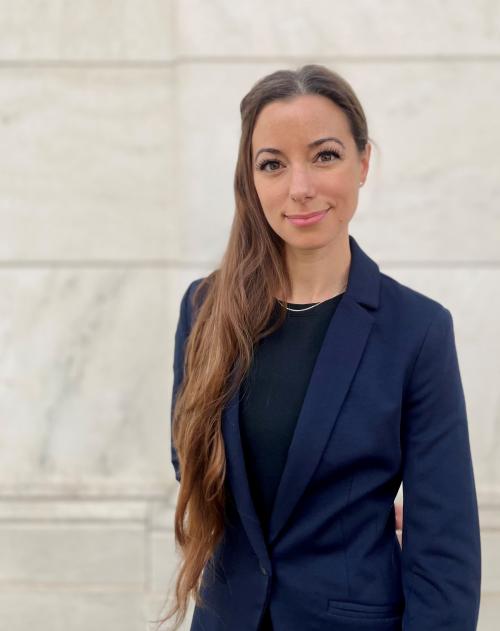
Nina R Benway, PhD CCC-SLP, from CEBH and the Department of Electrical Engineering at the University of Maryland, College Park has received a K99/R00 Pathway to Independence Award from the National Institute on Deafness and Other Communication Disorders, one of the National Institutes of Health. The Pathway to Independence Award is a highly competitive two-phase grant that supports exceptional early-career scientists as they transition from postdoctoral training to independent research programs. This award will see Dr. Benway develop AI tools that could transform speech therapy for children with chronic speech sound disorders.
Speech sound disorders affect millions of Americans and result in difficulty with the production of speech sounds. The long-term goal of Dr. Benway’s research is to use artificial intelligence (AI) to make best-practice speech therapy available to more children with speech sound disorders, without adding to the workload of speech-language pathologists. Dr. Benway has already developed AI-assisted therapy tools that can help children practice their speech in between visits with a clinician, but these tools do not yet provide real-time feedback on how a child is moving their tongue, lips, and jaw. This feedback, including visual biofeedback of the tongue, distinguishes the most effective speech therapy. The central premise of Dr. Benway’s K99/R00 project is that Speech Inversion AI technology developed by Dr. Carol Espy-Wilson at the University of Maryland, College Park can be used to infer how a child’s tongue, lips, and jaw are moving in real time, using only a microphone. This makes it possible to deliver high-quality speech movement feedback anywhere therapy happens.
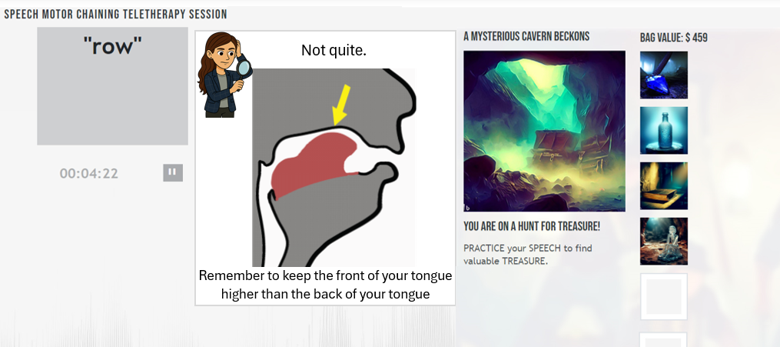
The award will further Dr. Benway’s training in speech kinematics, clinical machine learning, and speech animation, building on her background as a speech-language pathologist, speech scientist, and engineer. Through the award, she will be mentored by Dr. Carol Espy-Wilson at the University of Maryland, College Park, Dr. Kristen Allison of Boston University, Dr. Visar Berisha of Arizona State University, and Dr. Mark Tiede of Yale University.
Dr. Benway’s research was previously supported by the CEBH T32 award and is currently supported by the American Speech-Language-Hearing Foundation New Investigators Research Grant.